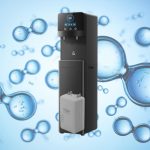
Hydrogen-Rich Water Dispenser: A New Generation All-in-One Drinking Solution
2 December, 2025
Why Do Water Purifiers with the Same Flow Rate Have Different Water Output?
15 December, 2025With the global demand for clean and healthy drinking water continuing to rise, the water purifier market is experiencing rapid growth. More brand owners, wholesalers, and distributors are choosing to partner with experienced water purifier manufacturers through OEM or ODM cooperation models. These partnerships enable companies to launch competitive products quickly, reduce costs, and strengthen their brand presence in the market.
A professional water purifier manufacturer not only ensures stable and reliable product quality but also supports customers in building strong private-label brands. This article provides a full breakdown of the entire OEM/ODM water purifier manufacturing process—from concept to mass production—so you can clearly understand how a purifier is created from start to finish.
OEM vs. ODM: Key Differences
Before starting a project, it’s important to understand the difference between the two main cooperation models:
OEM (Original Equipment Manufacturer)
Under the OEM model, the customer owns the product design, technical specifications, brand, and marketing strategy. The factory is responsible only for manufacturing the product according to the customer’s blueprint and quality requirements.
ODM (Original Design Manufacturer)
In this model, the factory provides the entire process from product design and R&D to final manufacturing. Customers can directly use the factory’s existing product designs or request modifications to create a customized version.
Best for: brands aiming for fast market entry, reduced R&D investment, and simplified development.
Full OEM/ODM Water Purifier Manufacturing Process
Requirements Discussion & Concept Confirmation
At the start of the project, the customer provides detailed requirement specifications, such as:
- Application scenario (household, commercial, office, outdoor)
- Electrical requirements (voltage, plug type, certifications)
- Filtration technology (RO, UF, composite filters, alkaline options)
- Additional functions (heating/cooling, smart display, APP control)
- Packaging and branding requirements
The manufacturer’s engineering team evaluates feasibility and proposes initial solutions.
Industrial Design & Structural Engineering
If custom design is needed, the factory provides several appearance design drafts. After the customer selects a style, structural engineers develop:
- High-precision 3D renderings
- Exploded internal structure diagrams
This ensures both aesthetics and performance requirements are met.
Prototype Creation (3D Printing Validation)
To reduce mold risks and verify design accuracy, the factory produces a prototype using 3D printing. The prototype is painted and assembled for evaluation.
At this stage, engineers verify:
- Appearance fit
- Assembly structure
- User interaction
- Component clearance
Once approved, the project enters mold development.
Mold Development & T1 Sample Adjustment
Molds are produced based on finalized drawings, typically requiring 30–45 days.
After the first test mold (T1), engineers inspect:
- Seam lines
- Shrinkage
- Warpage
- Burrs
The mold is adjusted until surface quality and dimensions meet standards.
Sample Assembly & Joint Testing
Once the mold is approved, the engineering team assembles 1–3 functional samples for comprehensive testing, including:
- Leakage and sealing tests
- High- and low-pressure performance
- RO filtration efficiency (TDS, flow rate, recovery ratio)
- Electrical safety and stability
- Pump, PCB, and sensor performance
Only after successful testing does the project proceed to mass production planning.
Raw Material Procurement & Incoming Quality Control
For mass production, the factory sources raw materials from certified suppliers, including:
- Filters and membranes
- Booster pumps
- Solenoid valves
- Electronics and PCBs
- Plastic and metal housings
Strict IQC inspections ensure compliance with safety and environmental standards (NSF, CE, RoHS, etc.).
Pilot Run & Process Optimization
Before full-scale production, the factory performs a pilot run to:
- Optimize assembly procedures
- Improve tooling and fixtures
- Update SOPs (Standard Operating Procedures)
- Ensure stability and consistency in mass production
Extra inspections are performed during the first batch to avoid quality issues.
Final Product Testing & Performance Verification
Every completed unit undergoes multiple tests:
- Water flow and leakage test
- Closed pressure / low-pressure performance test
- TDS and desalination rate testing
- Wastewater ratio testing
- Functions verification (heating, cooling, sensors, display)
- Final appearance inspection
Only fully qualified products proceed to packaging.
Packaging & Shipping Preparation
After passing inspection, the product is:
- Cleaned and dried
- Packed with moisture-proof film
- Placed into custom boxes (color box, manuals, accessories, certificates)
- Palletized according to export shipping requirements
Packaging strength is verified through drop and stacking tests.
Logistics, Delivery & After-Sales Support
The factory assists with logistics coordination or works with the customer’s freight forwarder. Customers receive:
- Packing list & shipping documents
- Installation & operation video tutorials
- Troubleshooting guide
- Warranty documents
- Remote technical support
For customer complaints, the factory provides failure analysis and solutions to support smooth sales in the market.
Five Key Advantages of Choosing a Strong OEM/ODM Manufacturer
Partnering with a reliable water purifier factory brings significant benefits:
✔ 1. Stable, Consistent Quality
Standardized production + strict QC ensure each unit meets the same high standards.
✔ 2. Fast R&D Response
Experienced engineers support rapid prototyping and product iteration.
✔ 3. Cost-Effective Production
Large-scale procurement and lean manufacturing reduce overall costs.
✔ 4. Accurate Lead Times
Strong project management and coordinated supply chains ensure timely delivery.
✔ 5. Complete After-Sales Support
Remote technical support and professional service systems enhance end-user satisfaction.
Conclusion: Partner With a Professional Factory to Accelerate Brand Growth
In an increasingly competitive water purifier market, choosing a manufacturing partner with strong R&D capability, a mature supply chain, strict quality control, and comprehensive after-sales support is crucial for brand success.
Whether you are building a new brand or expanding your existing product line, a professional OEM/ODM water purifier manufacturer can help you bring your product strategy to life and seize market opportunities quickly and efficiently.